How petroleum products are traded
Three things underpin a petroleum-product deal: the technical specification (a reference standard such as EN 590 or ASTM D975 for gasoil and EN 228 for gasoline), the quantity and mode of transport (road tanker, rail tank car, ISO tank or vessel) and the delivery terms under Incoterms. Quality and quantity are confirmed by a certificate of analysis and, for large cargoes, by an independent inspection report at the loading point.
Gasoline
Gasoline is a blend of light hydrocarbons (C4 to C12) made from refinery streams such as reformate, catalytically cracked naphtha and isomerate, plus additives. Market grades are known mainly by octane number (for example 91 and 95) and sulfur level (Euro 4 at 50 ppm, Euro 5 at 10 ppm).
| Property | What is usually requested |
|---|---|
| Research and motor octane (RON / MON) | e.g. RON 91 or 95 |
| Sulfur | max. 50 or 10 ppm |
| Vapour pressure (RVP) | by season and destination climate |
| Benzene, aromatics, olefins | max. volume % |
| Density and distillation | at 15 °C; 10, 50 and 90% points and final boiling point |
| Reference standard | EN 228, ASTM D4814 or the national specification of the destination |
Gasoline trades in bulk only, and its transport and storage follow flammable-liquid (class 3) regulations.
Gasoil (Diesel)
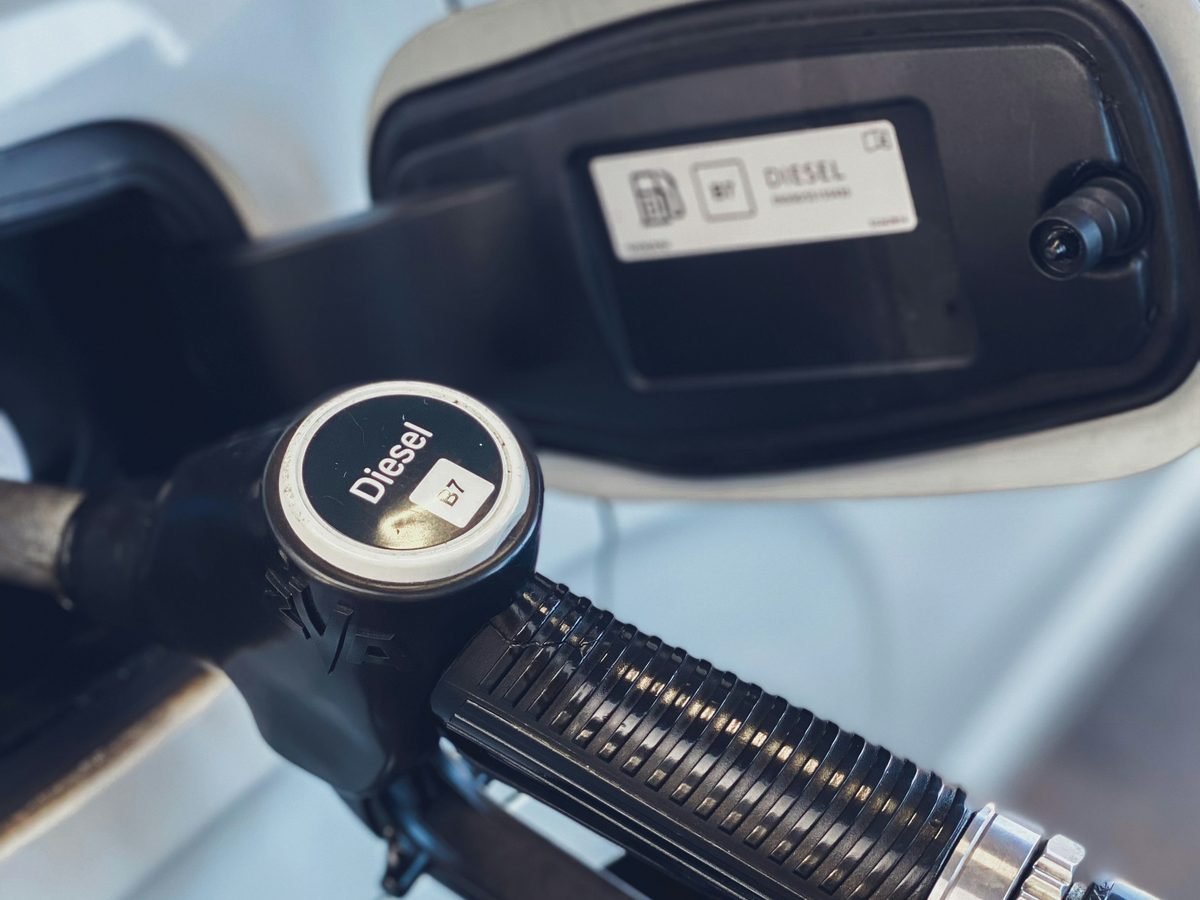
Gasoil, or diesel, is the middle-distillate cut of crude refining (about 180 to 360 °C) and fuels diesel engines, generators, industrial burners, agricultural and construction machinery, and vessels. Grades are known above all by sulfur content: from 10 ppm (ultra-low sulfur, the Euro 5 level) to 500 and 5000 ppm for industrial use and some markets. For vessels, marine gasoil (MGO) is traded as DMA and DMB grades under ISO 8217.
| Property | What is usually requested |
|---|---|
| Sulfur | max. 10, 50, 500 or 5000 ppm |
| Cetane number / index | min. 51 (EN 590) or 40 to 45 (ASTM) |
| Density at 15 °C | about 820 to 845 kg/m³ |
| Flash point | min. 55 °C (EN 590) or 52 °C (ASTM) |
| Cloud point, pour point, CFPP | by destination climate and season |
| 95% recovered | max. 360 °C |
| Viscosity, water and sediment, ash, carbon residue | per reference standard |
| Reference standard | EN 590, ASTM D975 (No. 2), ISO 8217 (marine) |
Octane boosters
An octane booster raises the octane number of gasoline and prevents knocking. Refiners and blenders use it to bring a base gasoline up to a higher grade.
| Family | Examples | Note on use |
|---|---|---|
| Oxygenates | methyl tert-butyl ether (MTBE), ethyl tert-butyl ether (ETBE), ethanol | blended at a few percent by volume |
| Aromatics | toluene, xylene, reformate | raise octane within the standard’s aromatics limit |
| Metallic | methylcyclopentadienyl manganese tricarbonyl (MMT), ferrocene | effective at ppm levels |
Before ordering: metallic additives such as MMT and ferrocene are restricted or banned in many countries and can harm catalytic converters and spark plugs. In your inquiry, state the base gasoline octane, the target octane, the chemistry permitted in the destination market, the quantity and the packaging.
Cetane improvers
A cetane improver raises the cetane number of gasoil, giving faster and more complete ignition, easier cold starting, less noise and smoke, and better diesel engine efficiency.
- Usual chemistry: 2-ethylhexyl nitrate (2-EHN), and in some cases di-tert-butyl peroxide (DTBP)
- Typical dose: about 0.05 to 0.5% by volume, depending on the base fuel and the target
- Effect: usually a gain of a few cetane numbers, depending on the base fuel composition
- Packaging: drums and IBCs; bulk for large volumes
State the base fuel’s cetane number, the target, the quantity and the packaging you need, and we will propose the product and dose.
Usual documents
- Proforma invoice and sales contract with the agreed specification
- Certificate of analysis (COA) and, where required, a quantity and quality inspection report
- Certificate of origin, packing list and transport documents (bill of lading)
- Safety data sheet (SDS)
Our grades
To be completed: List the gasoline and gasoil grades and the additives you supply (octane number, sulfur content, reference standard, additive chemistry).
Our packaging and delivery
To be completed: List available packaging (bulk, bags, drums, etc.), minimum order and delivery terms (Incoterms, origin).
Shipping documents
To be completed: List the documents supplied with a shipment (e.g. certificate of analysis, technical data sheet, certificate of origin) or link the files.
Images